
010-若依pro(ruoyi-vue-pro)的security 模块学习
config: 用来配置安全相关的权限等core: 一些安全的业务逻辑META-INF: 配置spring的自动import类学习流程org.springframework.boot.autoconfigure.AutoConfiguration.imports 知道自动导包的类cn.iocoder.yudao.framework.security.config.YudaoSecurityAuto
·
前言
学习 ruoyi-vue-pro 的 yudao-framework / yudao-spring-boot-starter-security 模块
学习流程
- org.springframework.boot.autoconfigure.AutoConfiguration.imports 知道自动导包的类
- cn.iocoder.yudao.framework.security.config.YudaoSecurityAutoConfiguration 这个看注释, 知道有什么类被注入
- cn.iocoder.yudao.framework.security.config.YudaoWebSecurityConfigurerAdapter
- 核心是 filterChain 方法
- 方法 @PermitAll 注解, 如何配置url权限
- SecurityProperties 的配置文件, 如何配置url权限
- 子模块实现AuthorizeRequestsCustomizer的类, 如何配置url权限
- 增加 token filter
- 核心是 filterChain 方法
一、模块简介
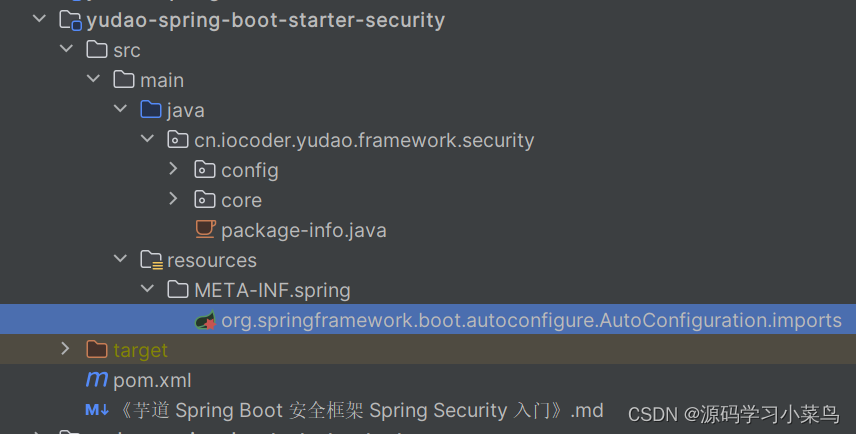
config: 用来配置安全相关的权限等
core: 一些安全的业务逻辑
META-INF: 配置spring的自动import类
配置自动扫描导入
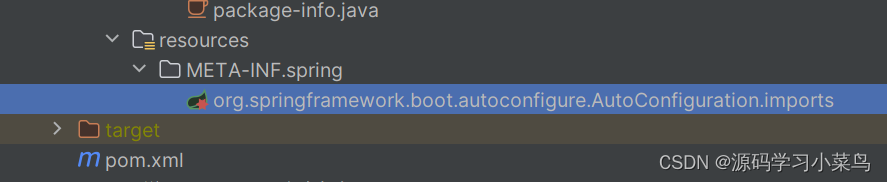
org.springframework.boot.autoconfigure.AutoConfiguration.imports
自动导入下面两个类
cn.iocoder.yudao.framework.security.config.YudaoSecurityAutoConfiguration
cn.iocoder.yudao.framework.security.config.YudaoWebSecurityConfigurerAdapter
YudaoSecurityAutoConfiguration
cn.iocoder.yudao.framework.security.config.YudaoSecurityAutoConfiguration
安全相关处理的Bean的注入
注入bean, 原来的注释很详细了
/**
 * 注入 Bean
 * Spring Security 自动配置类,主要用于相关组件的配置
 *
 * 注意,不能和 {@link YudaoWebSecurityConfigurerAdapter} 用一个,原因是会导致初始化报错。
 * 参见 https://stackoverflow.com/questions/53847050/spring-boot-delegatebuilder-cannot-be-null-on-autowiring-authenticationmanager 文档。
 *
 * @author 芋道源码
 */
@AutoConfiguration
@EnableConfigurationProperties(SecurityProperties.class)
public class
YudaoSecurityAutoConfiguration {

    @Resource
    private SecurityProperties securityProperties;

    /**
     * 处理用户未登录拦截的切面的 Bean
     */
    @Bean
    public PreAuthenticatedAspect preAuthenticatedAspect() {
        return new PreAuthenticatedAspect();
    }

    /**
     * 认证失败处理类 Bean
     */
    @Bean
    public AuthenticationEntryPoint authenticationEntryPoint() {
        return new AuthenticationEntryPointImpl();
    }

    /**
     * 权限不够处理器 Bean
     */
    @Bean
    public AccessDeniedHandler accessDeniedHandler() {
        return new AccessDeniedHandlerImpl();
    }

    /**
     * Spring Security 加密器
     * 考虑到安全性,这里采用 BCryptPasswordEncoder 加密器
     *
     * @see <a href="http://stackabuse.com/password-encoding-with-spring-security/">Password Encoding with Spring Security</a>
     */
    @Bean
    public PasswordEncoder passwordEncoder() {
        return new BCryptPasswordEncoder(securityProperties.getPasswordEncoderLength());
    }

    /**
     * Token 认证过滤器 Bean
     */
    @Bean
    public TokenAuthenticationFilter authenticationTokenFilter(GlobalExceptionHandler globalExceptionHandler,
                                                               OAuth2TokenApi oauth2TokenApi) {
        return new TokenAuthenticationFilter(securityProperties, globalExceptionHandler, oauth2TokenApi);
    }

    @Bean("ss") // 使用 Spring Security 的缩写,方便使用
    public SecurityFrameworkService securityFrameworkService(PermissionApi permissionApi) {
        return new SecurityFrameworkServiceImpl(permissionApi);
    }

    /**
     * 声明调用 {@link SecurityContextHolder#setStrategyName(String)} 方法,
     * 设置使用 {@link TransmittableThreadLocalSecurityContextHolderStrategy} 作为 Security 的上下文策略
     */
    @Bean
    public MethodInvokingFactoryBean securityContextHolderMethodInvokingFactoryBean() {
        MethodInvokingFactoryBean methodInvokingFactoryBean = new MethodInvokingFactoryBean();
        methodInvokingFactoryBean.setTargetClass(SecurityContextHolder.class);
        methodInvokingFactoryBean.setTargetMethod("setStrategyName");
        methodInvokingFactoryBean.setArguments(TransmittableThreadLocalSecurityContextHolderStrategy.class.getName());
        return methodInvokingFactoryBean;
    }
YudaoWebSecurityConfigurerAdapter
cn.iocoder.yudao.framework.security.config.YudaoWebSecurityConfigurerAdapter
配置准入规则
自定义 SecurityFilterChain
    @Bean
    protected SecurityFilterChain filterChain(HttpSecurity httpSecurity) throws Exception {
        // 登出
        httpSecurity
                // 开启跨域
                .cors().and()
                // CSRF 禁用,因为不使用 Session
                .csrf().disable()
                // 基于 token 机制,所以不需要 Session
                .sessionManagement().sessionCreationPolicy(SessionCreationPolicy.STATELESS).and()
                .headers().frameOptions().disable().and()
                // 一堆自定义的 Spring Security 处理器
                .exceptionHandling().authenticationEntryPoint(authenticationEntryPoint)
                .accessDeniedHandler(accessDeniedHandler);
        // 登录、登录暂时不使用 Spring Security 的拓展点,主要考虑一方面拓展多用户、多种登录方式相对复杂,一方面用户的学习成本较高

        // 获得 @PermitAll 带来的 URL 列表,免登录
        Multimap<HttpMethod, String> permitAllUrls = getPermitAllUrlsFromAnnotations();
        // 设置每个请求的权限
        httpSecurity
                // ①:全局共享规则
                .authorizeRequests()
                // 1.1 静态资源,可匿名访问
                .antMatchers(HttpMethod.GET, "/*.html", "/**/*.html", "/**/*.css", "/**/*.js").permitAll()
                // 1.2 设置 @PermitAll 无需认证
                .antMatchers(HttpMethod.GET, permitAllUrls.get(HttpMethod.GET).toArray(new String[0])).permitAll()
                .antMatchers(HttpMethod.POST, permitAllUrls.get(HttpMethod.POST).toArray(new String[0])).permitAll()
                .antMatchers(HttpMethod.PUT, permitAllUrls.get(HttpMethod.PUT).toArray(new String[0])).permitAll()
                .antMatchers(HttpMethod.DELETE, permitAllUrls.get(HttpMethod.DELETE).toArray(new String[0])).permitAll()
                // 1.3 基于 yudao.security.permit-all-urls 无需认证
                .antMatchers(securityProperties.getPermitAllUrls().toArray(new String[0])).permitAll()
                // 1.4 设置 App API 无需认证
                .antMatchers(buildAppApi("/**")).permitAll()
                // 1.5 验证码captcha 允许匿名访问
                .antMatchers("/captcha/get", "/captcha/check").permitAll()
                // 1.6 webSocket 允许匿名访问
                .antMatchers("/websocket/message").permitAll()
                // ②:每个项目的自定义规则
                .and().authorizeRequests(registry -> // 下面,循环设置自定义规则
                        authorizeRequestsCustomizers.forEach(customizer -> customizer.customize(registry)))
                // ③:兜底规则,必须认证
                .authorizeRequests()
                .anyRequest().authenticated()
        ;

        // 添加 Token Filter
        httpSecurity.addFilterBefore(authenticationTokenFilter, UsernamePasswordAuthenticationFilter.class);
        return httpSecurity.build();
    }
总结

快速构建 Web 应用程序
更多推荐



 1
1 0
0- 0


 已为社区贡献14条内容

所有评论(0)